Life– Terror. Ecstasy. Fight. Denial. Flight. Failure. PAIN. Forgiveness. Reconciliation. Hope. Love. Peace – Death.
Where were you when Rachel Reeves delivered her inaugural Budget?
The defeat of the Conservative Government just 100 days previous promised the end of a 14 year period of managed decline (austerity) for UK public services. The recent budget is the first opportunity for the new Labour government to ‘reset’? To commence what is going to be a lengthy, painful, rebuilding process. It was never ever going to be a magic bullet. Even the most optimistic of souls would agree that some things will have to get worse before they get better?
Perspective?
A lot depends upon who you are, where you are, what your economic position/status is, what side of the fence you are? Reeves [Labour] focus was on levelling up for the many and ending the previous years of pandering to the few. Clearly, the first, ‘post austerity’ Labour budget for 14 years was always going to be challenging?
Labour are tasked with remedying a 14 year period of sustained underfunding [austerity] of all our public services, all of whom are now desperate for hard cash and fast? Plus, Labour were starting with a £-14 Billion deficit? Labour had inherited the compensation payments for victims of the infected blood scandal, £11.8bn, and another £1.8bn for victims of the Post Office Horizon IT scandal which, the Tories had kicked into the long grass pre-election.
What did austerity mean in the UK?
The driver for ‘Austerity’ was debt control, in order to cap, spiralling, national debt [borrowing]. A set of economic policies implemented by successive Torie governments to control public sector debt. Austerity measures included a reduction in government spending and an increase in tax revenues, to reduce the budget deficit and avoid a national debt crisis.
Coalition and Conservative governments in office from 2010 to 2019 used the term, and it was applied again by many observers to describe Conservative Party policies from 2021 to 2024, during the cost of living crisis. Between 2010-11 and 2022-23, net spending per person on cultural services was cut by 43% in real terms, on roads and transport spending by 40%, on housing by 35% and on planning and development by a third.
It is viewed that austerity negatively impacted health by causing increased unemployment, poverty and homelessness. It is also argued that austerity policies had a negative impact on healthcare services as a result of reduced funding.
How many people died due to austerity in the UK?
The scars of austerity remain and are painfully visible. A 7.9 million waiting list for NHS treatment. More potholes on the roads, fewer bus services, and libraries and leisure centres shutting their doors for good: the evidence of squeezed local government budgets has been growing across the UK for more than a decade.
While some spending changes are a result of evolving responsibilities, for example, in education where the academisation of schools has resulted in funding shifting to central government, others are simply down to shifts in budgetary pressure with local councils being constantly squeezed for cuts in spending.
Many councils’ core budgets shrunk by half since 2010
After taking inflation and population growth into account, net spending on sport and leisure facilities fell to £7.09 per person in 2022-23 – down 44% from £12.66 when the Conservative-Liberal Democrat coalition government took power. England has lost almost 400 swimming pools since 2010.
More than half of the areas have made cuts of more than 50% to highways and transport spending since 2010-11, while more than two-fifths have cut spending on sports and cultural activities by more than half.
Croydon, a council that has issued two bankruptcy notices in the last three years, has made the biggest reduction in culture and sport net spending per person, down 85%. It is followed by Herefordshire (-81%) and Windsor and Maidenhead (-81%).
In terms of net highways and transport spending, the sharpest decreases have been in North Yorkshire (-97%), Bath and North East Somerset (-96%) and Lambeth borough (-96%).
Cuts to spending on housing services have occurred in 84% of English council areas since 2010-11, with reductions of more than 50% being made in 49 areas. South Tyneside (-95%), Knowsley (-84%) and Slough (-80%) recorded the largest cuts.
However, while the Public Sector was decimated, some groups benefited:
High earners: The personal allowance for income tax increased by a third in real terms, reducing the tax rate for all but the highest earners.
Corporations: The main rate of corporation tax was cut from 28% to 19% between 2010 and 2018. Wealthy pensioners and older homeowners also benefited.
Where were you when Rachel Reeves delivered her inaugural Budget?
I was listening live on the radio driving to Warrington to deliver a watch I had sold. I arrived during the closing comments. ‘Ron’ 70-75, a semi retired, former ambulance driver, joined me in my car outside his council flat. A planned ‘text me when you arrive’ clandestine, liaison as Ron had not told his wife he had bought my watch. ‘She is listening to the budget in the other room, I can sneak it in’, Ron said as he took his seat.
‘What do you think of the Budget then Ron’, I said, ‘Rubbish’ he replied. ‘Oh, ‘what don’t you like then?’ [Silence]. I repeated the question, ‘what did you, specifically not like about it’? Ron [eventually],‘I don’t like Tories’!
[Me], ‘You do realise that we no longer have a Torie Government Ron?, We now have a Labour government?’ [Ron] ‘you mean Blair and that lot?’ I chose to change the subject.
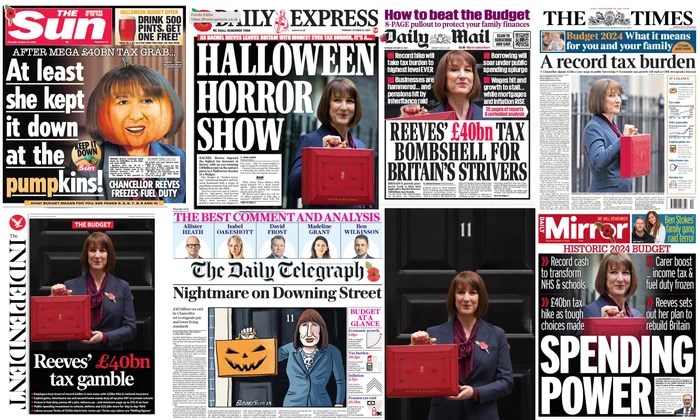
For the past two weeks (at least) we have been bombarded by media coverage building up to, during and now, post, the first ever budget from a female chancellor, the first Labour budget for 14 years.
My overall impression of the media coverage is that it has been excessively negative. Highlighting the ‘negatives’ and hardly a mention of any positives? Is the incessant negative spin by the media of the 2024 budget justifiable? I don’t see it?
The Department for Education will receive £6.7bn of capital investment, a 19% real-terms increase. That includes £1.4bn to rebuild more than 500 schools in the greatest need. The schools budget will increase by £2.3bn to support the hiring of teachers. There will be a further £2.1bn for school maintenance, a £300m increase. A £1bn increase in funding for special educational needs. There will be another £300m for higher education. Urgent remedial funding?
Why is this not front and centre news?
The government will spend £5bn on housing investment in 2025-26, including increasing the supply of affordable housing. A significant start to the end of our children being unable to afford their own homes? 1000, affordable homes in my city, Liverpool. The government will reduce right-to-buy discounts, and local governments will retain the earnings from council housing sales to allow them to reinvest. Why aren’t the media ‘talking’ about this?
The concept of non-domicile residents will be abolished from April – Non-domiciled residents or ‘non-doms’, as they are popularly known, are individuals who live in the UK (have their residence in the UK), but claim tax on their permanent place of residence abroad. Simply put, these individuals do not have to pay UK tax rates on their foreign income. It has been estimated that while non-domiciled residents contribute nearly £8 billion a year to the UK economy, they save around £10.9 billion through associated income and capital gains on their foreign and offshore income.
A fair wage for hard working people? – The “national living wage”, the legal minimum for over-21s, will increase by 6.7% to £12.21, equivalent to £1,400 a year for an eligible full-time worker. People should be paid a realistic wage? Care home workers, manual labour, hospitality sector workers work extremely hard for their wages. A wage that at least gives them a chance of making plans for their future and the future of their families?
A levy on vapes – a welcome deterrent to protect the epidemic trend of ‘young’ vapers?
Reliefs will be reformed for business and agricultural assets – After £1m, those assets will attract inheritance tax of 20%. Fair enough? The rest of us only have £325,000 inherited tax free.
VAT will be brought in on private school fees – from January 2025. At last! Why should those who can most afford it be privileged be exempt?
£500m increase in the roads budget – next year to target potholes. About time!
Despite all of these positive measures the overwhelming dominant media focus is increased national insurance payments by employers. However, nothing is mentioned of permanently lower business rates for retail, hospitality and leisure businesses from 2026-27. Until then they will also receive 40% relief on business rates up to a cap of £110,000.
Employment allowance will be increased from £5,000 to £10,500, reducing national insurance for smaller businesses. Taxes on carried interest, generally paid by private equity managers, will rise from 28% to 32% from April.
Oil profits levy [windfall taxes] will be increased to 38% and extended. About time we Realistically tapped into the ridiculous profits of our super-rich energy companies.
What did the Reeves budget do for you?
If you do most of your travelling by private Jet or you are an ‘asset rich’ farmer you are rather pissed off? If your a 21 year old restaurant waiter, previously on a zero hours contract, now looking to buy a house, in Liverpool, you might see things differently?
For me 1p off a pint of Shipyard won’t change my life but half a billion £’s spent on improving our roads might save me a small fortune. The biggest win for me is the instant injection of cash into the NHS, I am and would be happy to pay more ‘tax’ in order to see a fully functioning NHS……. and pot-hole free roads!
Most of the positive measures outlined in the Reeves 2024 Budget have been ignored by the media? It begs the question, why? Just 100 days in, surely it is not that they are ‘setting Labour up to fail?’
Thanks for Reading
#Peace
 Dying to Live