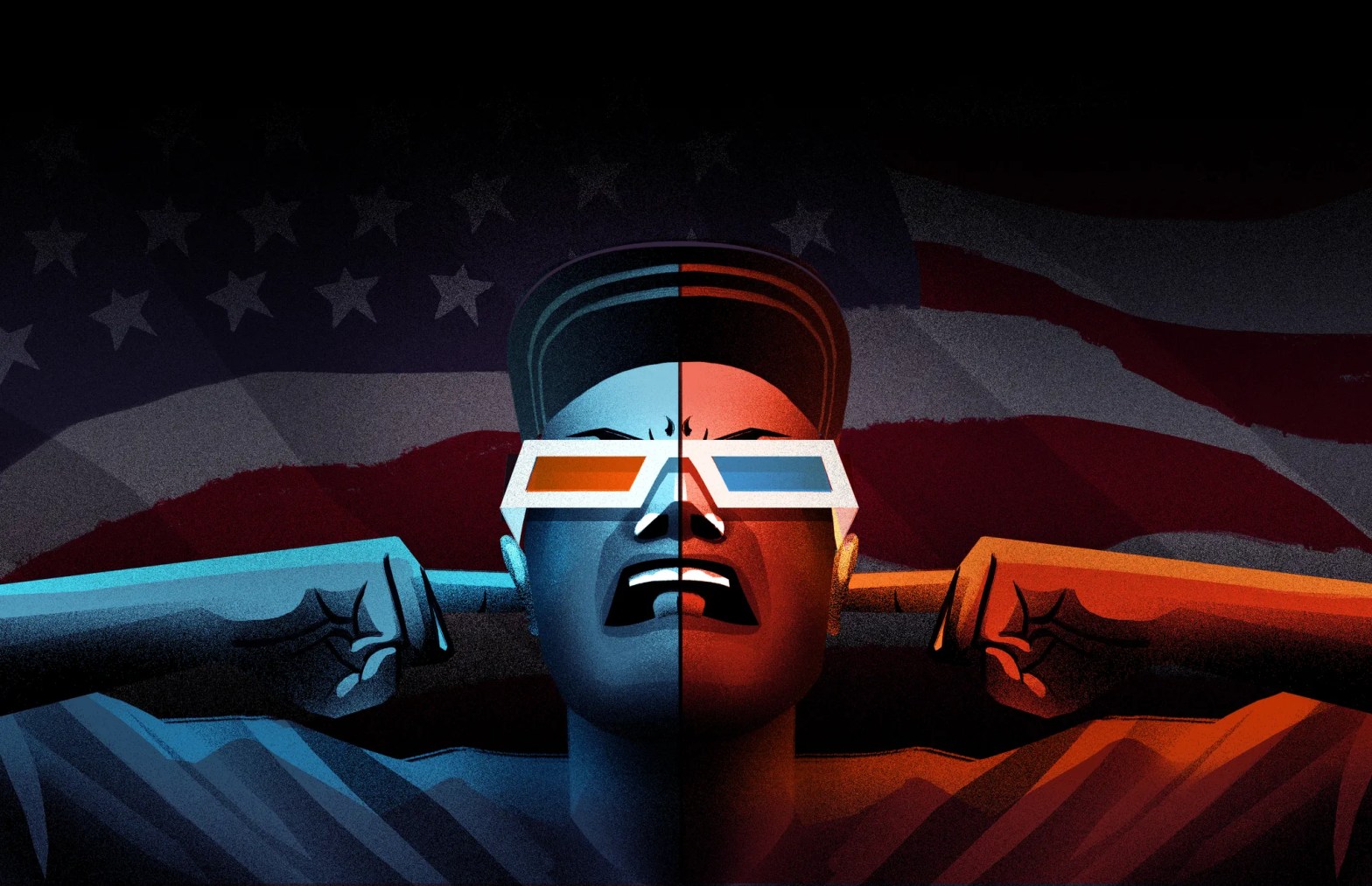
Life – Terror. Ecstasy. Fight. Denial. Flight. Failure. PAIN. Forgiveness. Reconciliation. Hope. Love. Peace – Death
A term that refers to the widespread documentation of, and concern about, disputes over public truth claims. The term’s academic development refers to the theories and research that explain the specific causes historically, and the effects of the phenomenon.
Post-truth politics, also described as post-factual politics or post-reality politics, amidst varying academic and dictionary definitions of the term, refer to a recent historical period where political culture is marked by public anxiety about what claims can be publicly accepted facts.
As Hannah Arendt wrote in her 1951 book, The Origins of Totalitarianism, “The ideal subject of totalitarian rule is not the convinced Nazi or the convinced communist, but people for whom the distinction between fact and fiction (i.e. the reality of experience) and the distinction between true and false (ie the standards of thought) no longer exist.”
Post-truth means that emotion shapes public opinion while facts are largely irrelevant. People value “truthiness,” Homo sapiens is a post-truth species, whose power depends on creating and believing fictions. Ever since the Stone Age, self-reinforcing myths have served to unite human collectives. As humans, we experience dramatically fewer hazards today than we did in our early evolution. However, genetic studies indicate that we are still evolving.
Examples of Truths
- Humans are mortal. …
- Everything in life changes. …
- The Earth is 71% water. …
“Universal truth” implies widely accepted facts which does not change over period, circumstance, location, and so on. These are the reality that are accepted with no doubt. Donald Trump enjoys a relationship to the truth that is chilly, occasional and distant. The Washington Post’s fact-checker blog has awarded its maximum dishonesty rating – four Pinocchio’s – to nearly 70% of the Trump statements it has fact checked [vetted]. That doesn’t mean the other 30% turned out to be true. They just earned three Pinocchio’s rather than the full four, which means ‘the Post’ found a shrivelled kernel of veracity wrapped inside the thick layers of fraud, distortion and deception.
Trump’s rhetoric has its roots in a populist political method that suggests nationalistic answers to political, economic, and social problems. These inclinations are refracted into such policy preferences as immigration restrictionism, trade protectionism, isolationism, and opposition to entitlement reform.
Among the biggest of whoppers, Trump has claimed;
Barack Obama was not born in the US;
Obama spent $4m in legal fees to hide the true facts of his birth;
Hillary Clinton (not Trump) was the true originator of these “birther” claims;
Trump, opposed the Iraq war before it happened (of which there is no evidence);
“Thousands” of Muslims in New Jersey celebrated the 9/11 attacks;
Trump started his business empire with a “small loan” from his father, [Trump inherited $40m];
His former rival, Ted Cruz’s’, father was a pal of Kennedy assassin Lee Harvey Oswald;
Trump made 2,140 false or misleading claims during his first year in office – an average of 5.9 a day. Trump is in a league of his own, apparently by even pretending to be his own spokesman, “John Miller”, in calls to reporters. But though he is a master of post-truth politics, he is not its sole practitioner. Boris Johnson has reminded us many many times that he has more in common with Trump than just a styled, idiosyncratic head of blond hair.
On BBC Radio 4’s Today programme, Johnson reminded listeners how slippery his grasp on the truth has long been. Asked whether it was true that he had drafted two versions of his Daily Telegraph column – one for leave, the other for remain – on the night of his big decision, suggesting his stance on this most fateful issue was driven by immediate career calculus rather than long-held principle, he failed to supply an answer. Worth remembering that Johnson has been sacked twice, (3 times if you include his Prime Ministership)?
On each occasion it was for dishonesty: once by the Times for making up a quote, and again by the former Tory leader Michael Howard, for lying to his face about an extramarital affair and finally for lying to parliament over Party-gate, and other Covid rule breaking matters.
Why is Post-truth so [now] universally accepted?
For decades now, objectivity – or even the idea that people can aspire toward ascertaining the best available truth – has been falling out of favour. Daniel Patrick Moynihan’s well-known observation that “Everyone is entitled to his own opinion, but not to his own facts” is more timely than ever: polarisation has grown so extreme that voters have a hard time even agreeing on the same facts.
All of this has been exponentially accelerated by social media, which connects users with like-minded members and supplies them with customised news feeds that reinforce their preconceptions, allowing us to live in ever narrower silos.
For that matter, relativism eager to expose the biases of western, bourgeois, male-dominated thinking; and by academics promoting the gospel of postmodernism, which argued that there are no universal truths, only smaller personal truths – perceptions shaped by the cultural and social forces of one’s day. Since then, relativistic arguments have been hijacked by the populist right.
The most significant shift is in media culture. Technology now allows politicians to communicate directly with their followers, with no need to transmit their claims through the fact-checking filter of a news organisation. Witness Trump and his Twitter account? Meanwhile, the rise of social media and, multiple cable TV channels and radio stations defined by political hue, means voters can easily get the entirety of their information from sources tailored to reflect their own views back to them.
That, in turn, makes them ever more unwilling to accept contradictory facts. “What has taken hold is an alternate reality, a virtual reality, where lies are accepted as truth and where conspiracy theories take root in the fertile soil of falsehoods.”
Can we reverse, eradicate the ‘Post-Truth’ era?
Journalism – Traditional fact-checking, the practice has become increasingly rare over the past decade of media layoffs and budget cuts. No fact is too minor to be checked: celebrities’ names, basic mathematical statements, or even that winter in the northern hemisphere ends in February. (Actually, depending on whether one uses the astronomical or meteorological definitions of the seasons, winter could end in March.) Every article ever published might require adjustments?, whether it’s a small change in date or a major interpretative clarification. Once these corrections are made, the story is ready to be published?, and we can be reasonably assured that it is true?
False content online has only multiplied over the years.
But the fake news designation has also been used to serve all kinds of purposes—including, increasingly, to disparage real news reports—most experts now avoid the term. The loss of a distinction between truth and feeling; we have entered an era in which “objective facts are less influential in shaping public opinion than appeals to emotion and personal belief.”
According to Gallup’s annual governance poll, by 2020, 60 percent of Americans said they trusted mass media “not very much” or “not at all.” This problem cannot be solved only by fact-checking Trump’s press conferences: those who already believe Trump have no reason to accept our fact checks. Without a trusted forum for conversation, we lose the ability to establish a common ground from which to converse and debate; we lose the ability to understand or negotiate with one another at all.
Media-literacy campaigns often seem like the most promising solution to this problem: instead of simply giving people facts, we should teach them how to assess the quality of information on their own. But, as a group of researchers in Denmark recently concluded, people don’t spread fake news because they think it’s real. Media-literacy programs are grounded in the same kind of naïve reasoning as fact-checking is: the idea that the spread of disinformation is caused by ignorance as opposed to by issues of polarisation and distrust.
In the Danish study, researchers showed 1,600 Twitter users a series of educational videos teaching them to identify untrustworthy content online and examined their Twitter interactions before and after they had watched the videos. The study found that the media-literacy training effectively taught people to identify false content but that this did not dissuade them from sharing it afterward. “Participants performing well on the ‘fake news’ quiz were just as likely to share untrustworthy news stories,” the researchers wrote—leading them to conclude that, generally, people don’t share fake news because they actually believe in the content’s accuracy. Rather, they believe in its value.
One of the greatest hurdles is our stubborn separation of rationality from emotion, a distinction both sides of the political spectrum rely on. People on the left will often say it is the right’s stubborn belief in a preferred alternative reality and its surrender to emotions of fear that lead it to problematic views and conspiracy theories.
But people on ‘the right‘ use the exact same rhetoric as those on ‘the left’: as Ben Burgis points out in his recent book, Give Them an Argument, the right often criticizes the left for being too “emotional” and failing to assess situations logically, as though feelings themselves cannot be rational responses to situations. Both sides believe they are the ones best suited to make informed decisions based on available facts, and each judges the other for being incapable of doing the same. The beginning to a possible solution is to realise that, although the world is politically divided in many ways, the main division is not between rational, intelligent people and irrational, emotional ones. Fact, opinion, and emotion often go hand in hand—in politics, journalism, and any kind of social interaction.
Thanks for Reading
#Peace
 Dying to Live