Life – Terror. Ecstasy. Fight. Denial. Flight. Failure. PAIN. Forgiveness. Reconciliation. Hope. Love. Peace – Death
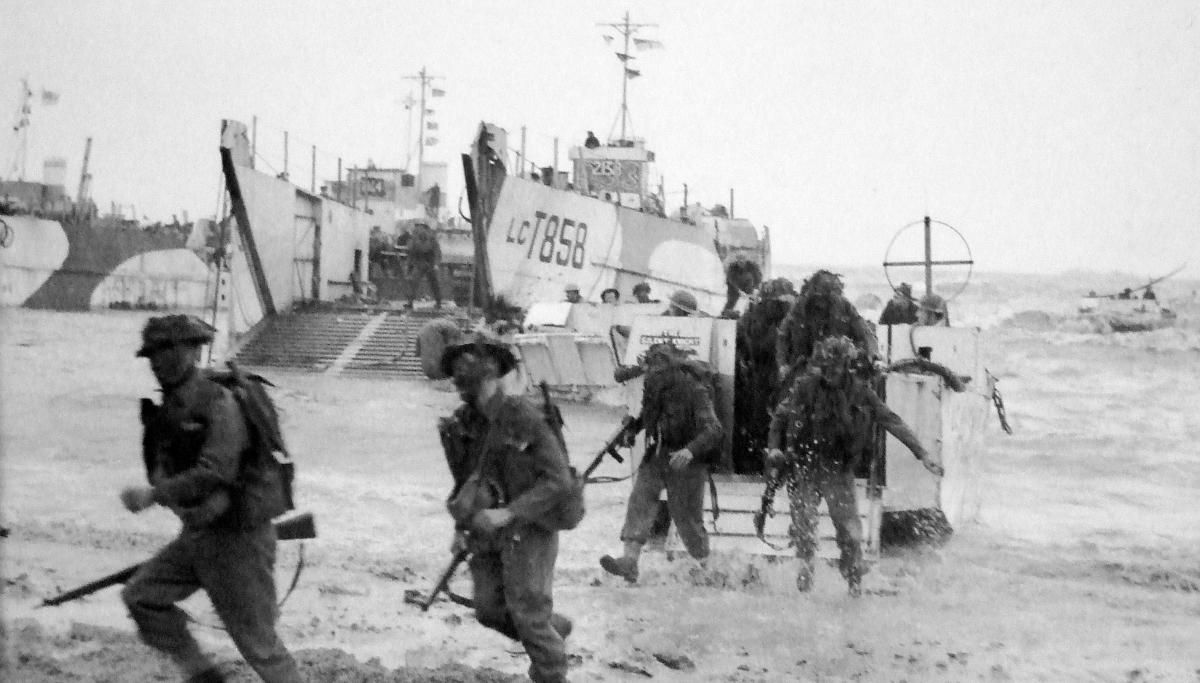
I started watching with what started as mild interest, five days of unprecedented live media (BBC) coverage of the 80th anniversary commemorations of the D Day Invasions. I have ended up in complete awe of the testimonies, some portrayed by professional actors, and some by veterans themselves. The events have been highly produced & magnificently presented from the British WW11 Commemoration Monument in Normandy, France.
UK Prime Minister Rishi Sunak and PM incumbent Labour leader Keir Starmer attended the along with King Charles in what may be one of few remaining anniversaries that D-Day veterans will attend. Sunak left early to attend an ‘important’ [political] election campaign opportunity, sparking a huge media frenzy regarding his conviction and sincerity in regards to the commemorations.
My dad, John Reynolds (1918-1987) fought in WW11. He was just 20 years of age. I have seen photographs of him, in his uniform, along with his ‘combat friends’ & fellow soldiers. He [they] looked far too young. Dad seldom talked about his ‘war’.
Apparently a familiar trait amongst services veteran [survivors]? Almost every, first- hand, testimony I listened to during the past 5 days have repeated a sad mantra, ‘we were the lucky ones’. We came home. Many recite the names of their dead ‘combat friends’, the not so lucky ones, who did not. Extremely personal and traumatic accounts of and from old men who were then just ‘babies’ some as young as 16. Many are almost apologising for being alive?
The daughter of a D-Day veteran from Kent said her father wanted a new generation to learn from the lessons of the past. Albert Figg, a gunner from Canterbury, fought in the Battle for Hill 112, an allied strategic point near Caen, Normandy, in June 1944.
Speaking at the memorial in France her father campaigned for many years to build, Annette Oliver said he had “wanted the young to be told about what had gone on – that life can be vicious and fragile”.
Hill 112 was the scene of one of the bloodiest battles of World War Two. Exactly 80 years ago allied troops headed from the Normandy beaches to capture the hill. During his lifetime Albert Figg campaigned to set up a memorial on the hill a place to remember the friends he had lost in the brutal 10-week battle. The sergeant with the 43rd Wessex Division died in 2017, aged 97. He would have not even been aware of this magnificent memorial monument.
D-Day Veteran Harry Billinge MBE passed away aged 96 on 5 April 2022. Harry, personally, raised more than £50,000 by collecting in his home-town of St Austell and was a champion of the regular giving Guardian Programme. Harry captured the hearts and wallets of the British public after being featured many times in the media. Arguably, it was his, sincere, efforts that prompted the Government into funding the completion of the current UK Normandy D-Day monument.
War Veterans, [still] traumatised, after 80 years, by their D-Day experiences and their physical and mental injuries. Many still suffering from immense ‘survivors guilt’? I [now] understand why my dad never spoke of his war.
Watching these extremely difficult D-Day veterans and their families accounts, the thing that has resonated with me above anything is? What about the 79th, 78th, 75th, 60th, …..51st, 14th, year D-Day commemorations? What about ‘All’ the other D-Day anniversaries, from 1944 to 2024?
The Normandy War Memorial commemorating those who served and died under British command in the Battle of Normandy was officially opened in 2021. A special ceremony that was broadcast live for the veterans and visitors unable to travel. The Normandy Memorial Trust was only created in 2016 to realise the dream of Normandy Veterans desperate to have a British Normandy Memorial. Why has this never been hugely significant event been recognised, memorialised, prior to 2016?
The British War Memorial Normandy commemorates in a single location the 22,442 men and women under British command who died on D-Day and the ensuing Battle of Normandy. The Memorial stands on an imposing site outside the village of Ver-Sur-Mer, overlooking “Gold Beach”, one of the principal beaches where British forces landed on 6 June 1944.
The core Memorial has been financed by the British Government from the LIBOR fund. A £30m project. The government’s LIBOR Scheme totalled £973 million raised by banking fines received from the Financial Conduct Authority between 2012 and 2015. In 2012, HM Treasury announced that LIBOR fines would be used to support the Armed Forces through the introduction of the £35 million, Armed Forces Covenant Grant Scheme.
The National Audit Office has investigated the management of the Libor Fund. Following an international investigation by financial regulators in 2012 it was revealed that several banks in the US and the EU were manipulating Libor, a benchmark interest rate for inter bank loans, for profit. UK regulators fined the banks £688 million. It was announced that all proceeds would “go to the benefit of the public”.
In 2015 an additional £284 million fine for manipulating foreign exchange markets was added to the Libor Fund, bringing the total amount allocated to the fund to £973 million. Parliament and the media have questioned the transparency of how the money from the fines is being distributed. The NAO investigation sets out how the government has distributed this money (see links to report below).
D-Day Hypocrisy: Trump and May talk peace yet wage war [Wednesday 5 June 2019]
In 2019 Theresa May and Donald Trump were accused of ‘abusing the memory of people who died on D-Day’, by using the 75th anniversary commemorations to ramp up support for military force. At an event in Portsmouth (5th June) they participated in military celebrations while praising NATO and the UK’s military support for the US.
The Peace Pledge Union (PPU) said they were disgusted by the hypocrisy of a statement by 16 world leaders, including May and Trump, saying they wanted to “resolve international tensions peacefully”. At the time Trump was threatening war with Iran and Venezuela, while Tory leadership candidates were promising substantial increases to military budgets in the UK.
The PPU also said that a number of politicians are ‘romanticising’ D-Day through constant references to heroism and sacrifice with little focus on the suffering of those involved. They added that the D-Day invasion in 1944 had at least as much to do with securing US-UK control of Europe as with defeating Fascism.
At that time the PPU called on the Allied governments to attempt a negotiated peace and to work with people in Germany who were hostile to Hitler, as well as with resistance movements elsewhere in Europe. An attempt to quell an imminent, large scale invasion, D-Day, that would inevitably lead to wide-scale civilian & services, deaths and casualties.
Instead, millions more people died over the following year, with the Allied powers in several places suppressing left-wing anti-Nazi resistance movements if they were seen to threaten US and UK government interests.
PPU spokesperson Symon Hill said:
“Many people who fought on D-Day were undoubtedly motivated by a desire to defeat Fascism. It is difficult to see such motives in the politicians and generals who sent them to fight’.
‘In 1944, the Nazi regime was weakening, with successes for resistance movements and growing opposition to Hitler within Germany. Rather than supporting such resistance, Churchill, Roosevelt and Stalin insisted on sending more troops to kill and die, and on bombing thousands of civilians, to cement their own power in Europe’.
“With similar hypocrisy, Theresa May praised the defeat of Fascism while sucking up to a far-right US President [Trump]. The memory of the people who died on D-Day abused when politicians use the anniversary to ramp up militarism.”
Shortly after D-Day, the PPU described the Allied invasion and bombing of Europe as “liberation through devastation”. At the same time, they praised many anti-Fascist movements, including a successful general strike in Denmark that had weakened Nazi occupation.
However, on several occasions in the Second World War, US and UK authorities suppressed left-wing anti-Nazi resistance movements to ensure that they did not take power after the defeat of the Nazis. In Greece in 1944, British commanders used former members of pro-Nazi militias to fight members of communist resisters. In Italy, US and UK authorities suppressed local committees that had taken power after the fall of Fascism, returning factories that had been taken in public ownership back to their wealthy owners, even when those owners had supported and funded the Mussolini regime.
On 30th June 1944, the PPU chairman Alex Wood wrote that the PPU was as committed to defeating Nazism as those who were fighting, but that,
“I do not believe that, in fact, that the evils which we abhor in the Nazi regime can be overcome by fighting the Nazis, much less by fighting all Germans… Many are concerned about the starvation in occupied countries and disquieted by the policy of obliteration bombing. Many do not accept the facile identification of the whole German people with the evil things that have been done in their name.”
June 4th 2024 – The global elite are in town to commemorate the 80th anniversary of D-Day. Along with as many as 25 world leaders there will be upwards of 12,000 of their security staff invading this normally sleepy part of Northern France.
In addition, 43,000 gendarmes, police and military personnel will be deployed on land, sea and in the air. A restricted traffic zone will be place throughout the region, and residents are being advised to stay at home on Thursday and Friday. Some schools will be closed on those days because of the disruption.
The Normandy American Cemetery, resting place of 9,388 Americans who were killed on 6 June 1944 and in the subsequent days and weeks of fighting, will be closed to the public on Wednesday and Thursday this week. That will be a disappointment to relatives wanting to pay their respects to their fallen family members. The British Normandy memorial will also be closed to the public on those days.
But the great and the good take precedence. President Joe Biden was present for a rare trip abroad, and he is extending his trip in France for an official state visit. He and Emmanuel Macron will reportedly discuss ‘the need for unwavering, long-term support for Ukraine’ in the face of the ongoing conflict with Russia.
Ukrainian President Volodymyr Zelenskyy is among the world leaders present in Normandy this week. The Elysée has made it clear that the 80th anniversary commemorations should ‘echo all the struggles of peoples and nations who are still fighting to exercise their sovereignty and freedom against oppression and hatred’. For that reason Vladimir Putin has not been invited, and it was announced last week that contrary to an earlier statement from France about ‘some form of Russia representation’, there will be none.
A spokesperson for President Macron explained that Russia’s invitation had been withdrawn because ‘the conditions for its participation are not there given the war of aggression launched in February 2022’.
One might argue that the conditions for participation are there, given that it is a Second World War commemoration, a conflict which cost the Soviet Union 25 million military and civilian lives’ [higher than all other nations added together]. Between them France, Britain and America lost 1.5 million people.
It should come as no surprise that Macron is attempting to make political capital out of this week’s commemorations. He has used the second world war before in order to score political points: in April 2017 he visited Oradour-sur-Glane in central France, where on 10th June 1944 the SS massacred the village’s 643 inhabitants. Macron made his pilgrimage just before voters went to the polls to decide whether he or Marine Le Pen should be president.
It is the European elections this Sunday [9th June], and right wing parties are predicted to be the biggest winners. During a state visit to Germany last week, Macron used a speech to warn of the danger posed by what he categorised as far-right parties: ‘An ill wind is blowing across Europe, so let’s wake up!’
Macron has been issuing such warnings for weeks, but they are falling on deaf ears. The ‘ill wind’ that many Europeans can feel blowing across the continent comes from the far left and their Islamist allies. Carried on this wind is an alarming rise in anti-Semitism and other forms of violence.
On Friday a man with a knife attacked several people in the town square of Mannheim in Southwest Germany. It is alleged he objected to a rally that was taking place against Islamic extremism. Germany’s Finance Minister Christian Lindner said, the death of the policeman ‘makes me angry about what is happening in our country. We must defend ourselves against Islamist terrorism with determination’.
President Biden will deliver an address on 7th (today) June at Pointe du Hoc (a cliff-top memorial commemorating the capture by Americans troops of a German gun battery), about the ‘importance of defending freedom and democracy’.
Given that Biden is also on the campaign trail, he might be tempted to make an oblique reference to the present. In a statement last year to mark the 79th anniversary of D-Day, Biden urged Americans to remember the sacrifice of whose who died in Normandy and ‘also recommit to the future they fought for – one grounded in freedom, democracy, equality, and opportunity for all.’
Earlier this year, Biden insinuated that his uncle, Ambrose J Finnegan, met a grisly end in Papua New Guinea after his aircraft was shot down during the Second World War. ‘There were a lot of cannibals,’ said Biden of Papua New Guinea, a remark that angered Papuan Prime Minister James Marape. He described the claim as ‘loose’ talk and said the pair had met several times and Biden had never previously mentioned his uncle.
Official records state that Finnegan’s aircraft crashed inexplicably into the Pacific off New Guinea in May 1944. One airman was rescued, three bodies were recovered from the wreckage, but no trace was found of Biden’s uncle.
Canadian Prime Minister Justin Trudeau also one of the leaders in Normandy this week, remembering the important contribution of Canadian troops on D-Day and beyond. ‘On the beaches of Normandy, our troops fought valiantly for peace and democracy,’ said a statement released by his office. ‘Many gave their lives so we could live free – and we will do what it takes to preserve and protect our hard-won freedoms.’
Earlier this year, a court ruled that Trudeau had infringed Canada’s charter of rights and freedoms by the imposition of the Emergencies Act. Trudeau rushed through the legislation in 2022 to criminalise a truckers’ ‘freedom convoy’, provoked by the country’s stringent Covid rules.
Frankly, who would want to be in Normandy this week?
If 12,000 security men and women in dark suits and dark glass weren’t bad enough, the political hypocrisy on show is unbearable.
Thanks for reading
#Peace
#FuckTheEstablishment
Investigation into the management of the Libor Fund – NAO report
 Dying to Live