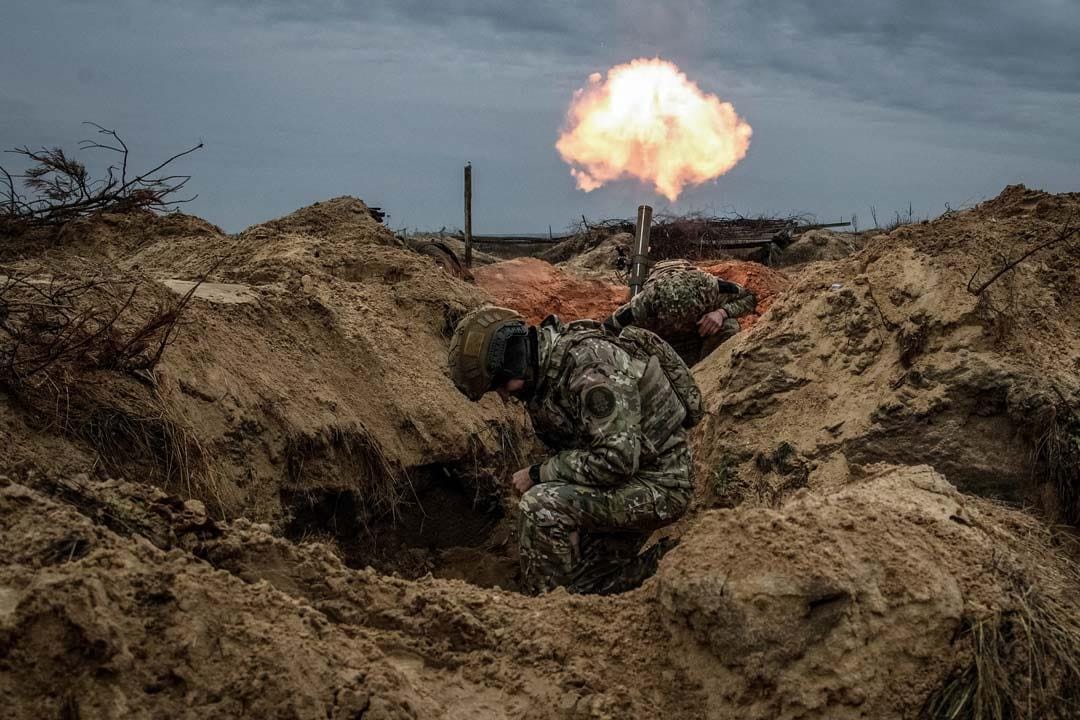
Life – Terror. Ecstasy. Fight. Denial. Flight. Failure. PAIN. Forgiveness. Reconciliation. Hope. Love. Peace – Death.
MIDDLE EAST
More than 45 armed conflicts are currently taking place throughout the Middle East and North Africa in the following territories: Cyprus, Egypt, Iraq, Israel, Libya, Morocco, Palestine, Syria, Turkey, Yemen and Western Sahara. The majority are non-international (NIACs), involving a multitude of armed non-state actors and foreign interventions by Western powers, Russia, and neighbouring countries – except for the NIACs taking place in Egypt and Turkey. Syria is the most affected country in the region. Several multiple and overlapping NIACs are taking place in the country – involving numerous armed groups who fight against the government and against each other –, along with two military occupations and three international armed conflicts.
AFRICA
Africa comes second in the number of armed conflicts per region with more than 35 non-international armed conflicts (NIACs) taking place in Burkina Faso, Cameroon, the Central African Republic (CAR), the Democratic Republic of the Congo, Ethiopia, Mali, Mozambique, Nigeria, Senegal, Somalia, South Sudan and Sudan. Several armed groups – fighting against government forces and/or against each other’s – are involved in these conflicts. Western powers and/or neighbouring countries are intervening in the NIACs that take place in Burkina Faso, Mali, Mozambique, Nigeria, and Somalia.
ASIA
Asia is the theatre of 19 non-international armed conflicts (NIACs) involving 19 armed groups. These are happening in Afghanistan, India, Myanmar, Pakistan and The Philippines. Two international armed conflicts – between respectively India and Pakistan, and between India and China – are also taking place in the region.
EUROPE: SEVEN ARMED CONFLICTS
The majority of armed conflicts that are taking place in Europe, four out of seven conflicts: Russia is currently occupying Crimea (Ukraine), Transdniestria (Moldova), as well as South Ossetia and Abkhazia (Georgia), while Armenia is occupying parts of Nagorno Karabakh (Azerbaijan). Europe is also the theatre of an international armed conflict (IAC) between Ukraine and Russia, and of two non-international armed conflicts (NIACs) in Ukraine opposing governmental forces with the self-proclaimed ‘People’s Republics’ of Donetsk and Luhansk in eastern Ukraine.
There are six non-international armed conflicts that are taking place in the South American regions split evenly between Mexico and Colombia.
‘While Colombia has experienced one of the longest non-international armed conflicts (NIACs) in modern times and is still the theatre of three NIACs, Mexico is characterized by three NIACs involving gangs’ drug cartels. This is the first time we classify armed violence involving criminal organizations as NIACs and we did so given the level of organization of the cartels and intensity of violence’, Dr Chiara Redealli.
War has been on the rise since about 2012, after a decline in the 1990s and early 2000s. First came conflicts in Libya, Syria and Yemen, triggered by the 2011 Arab uprisings. Libya’s instability spilled south, helping set off a protracted crisis in the Sahel region. A fresh wave of major combat followed: the 2020 Azerbaijani-Armenian war over the Nagorno-Karabakh enclave, horrific fighting in Ethiopia’s northern Tigray region that began weeks later, the conflict prompted by the Myanmar army’s 2021 power grab and Russia’s 2022 assault on Ukraine. Add to those 2023’s devastation in Sudan and Gaza. Around the globe, more people are dying in fighting, being forced from their homes or in need of life-saving aid than in decades.
Can we stop things falling apart?
2024 begins with wars burning in Gaza, Sudan and Ukraine and peace making in crisis. Worldwide, diplomatic efforts to end fighting are failing. More leaders are pursuing their ends militarily. More believe they can get away with it.
On some battlefields peacemaking is non-existent or going nowhere. The Myanmar junta and the officers who have seized power in the Sahel are bent on crushing rivals. In Sudan, perhaps today’s worst war in sheer numbers of people killed and displaced. As of 21 January 2024, at least 13,000–15,000 people had been killed and 33,000 others were injured. As of 21 March, over 6.5 million were internally displaced and more than two million others had fled the country as refugees, and many civilians in Darfur have been reported dead as part of the 2023 Masalit massacres. Honestly? Are you aware of ANY of this?
U.S.- and Saudi-led diplomatic efforts were muddled and half-hearted for months. Russian President Vladimir Putin, banking on dwindling Western support for Kyiv, seeks to force Ukraine to surrender and demilitarise – conditions that are understandably unpalatable for Ukrainians. In all these places, diplomacy, such as it is, has been about managing the fallout: negotiating humanitarian access or prisoner exchanges, or striking deals such as the one that got Ukrainian grain onto global markets via the Black Sea. These efforts, while vital, are no substitute for political talks.
Where fighting has ended, the quiet owes less to dealmaking than battlefield victory. In Afghanistan, the Taliban seized power as U.S. troops left, without bargaining with Afghan rivals. Ethiopian Prime Minister Abiy Ahmed struck a deal in late 2022 with rebel leaders that ended the Tigray war, but it was more a cementing of Abiy’s victory than an accord about the region’s future. This past year, Azerbaijan took back control of Nagorno-Karabakh, its September offensive finishing off what its victory in the 2020 war started, ending a 30-year standoff over the enclave and forcing an exodus of ethnic Armenians.
Wars in Libya, Syria and Yemen have also wound down but without lasting accommodation among the parties or even, in Libya and Syria, a political track worth the name. In fact, belligerents are mostly waiting for a chance to seize more land or power.
The past few months’ ghastly turn in Israel-Palestine is perhaps the trend’s starkest illustration. Peacemaking efforts there petered out years ago, and world leaders largely looked away. Several Arab governments struck U.S.-brokered deals with Israel that mostly ignored Palestinians’ plight. Israel ate up more Palestinian land, with settlers acting ever more brutally, often in concert with the Israeli army. The occupation became ever crueller. Palestinians’ hopes of statehood withered, as did the credibility of their leaders who had banked on cooperation with Israel. Nothing can justify Palestinian militants’ murderous rampage on 7 October. But the Israeli-Palestinian conflict did not start that day. Now, the Hamas-led attack and Israel’s retribution in Gaza – an assault that has razed much of the strip and could plausibly expel many of its inhabitants – may well erase hope for peace for a generation.
The problem lies in Global Politics
The collapse of the West’s relations with Russia and China-U.S. competition shoulder much of the blame. Even in crises in which they are not directly involved, big powers dispute what diplomacy should entail and whether or how to throw their weight behind it. Uncertainty about the United States contributes, too. U.S. power is not in freefall, and its decline relative to that of other countries does not necessarily herald disorder. Indeed, it would be misleading to overstate the sway the United States ever enjoyed as a hegemon; overlook its destabilising misadventures in Iraq, Libya and other places; or underplay its military strength today. The past two years offer plenty of evidence of U.S. clout – both for good, in helping Ukraine defend itself, and for ill, in lending Israel’s ruin of Gaza near unconditional support. The problem is more the United States’ political dysfunction and seesawing, which brings volatility to its global role. A potentially divisive 2024 vote and the possible return of former U.S. President Donald Trump, whose fondness for strongmen and disdain for traditional allies already rattle much of Europe and Asia, make for an especially uneasy year ahead.
Several non-Western middle powers have become more assertive. That Brazil, the Gulf monarchies, India, Indonesia and Turkey (to name just a few) enjoy more influence is in itself no bad thing. To some degree, middle powers’ refusal to line up tidily behind competing big powers serves as something of a restraint on those capitals. But especially in the Middle East and parts of Africa, regional powers have gotten more active in wars – as, they would argue, big powers have long done – and prolonged fighting. Warring parties today have more places to turn for political backing, funds and weapons. Peacemakers have to reckon with not only belligerents on the ground but also outside sponsors who see local fights through the prism of wider rivalries.
Neither Iran and its non-state allies nor the United States and Israel want a regional confrontation, but there are plenty of ways that the Israel-Hamas war could trigger one.
In some ways, the war plays into Iran’s hands. It has frozen, for now, a U.S.-brokered deal that Iran disliked, which would have seen Saudi Arabia normalise relations with Israel, Tehran’s sworn foe. It has also revealed the reach of the so-called axis of resistance, a collection of Iran-backed armed groups – Hizbollah in Lebanon, various militias in Iraq and Syria, the Houthis in Yemen, plus Palestinian militant groups Hamas and Islamic Jihad – over which Tehran exercises varying degrees of control. These groups have turned the temperature up (when Israeli ground troops entered Gaza) and down (during the week-long truce in Gaza when hostage-prisoner exchanges were conducted) in a manner that shows they can act in concert. Tehran welcomes the swell of rage directed at Israel and the United States across the Middle East.
But the war comes at a bad time for Tehran. Its relations with Washington had calmed after a patch of Western fury at the regime’s crushing of protests in late 2022 and weapons deliveries to Russia. In August, the United States and Iran exchanged detainees, in parallel to a tacit understanding that entailed Tehran dissuading Iraqi and Syrian militias from targeting U.S. forces, slowing nuclear development and cooperating better with inspectors, reportedly in return for the U.S. government easing enforcement of sanctions to help Iran’s battered economy. That arrangement is now in tatters.
With U.S. officials mostly seeing diplomacy with Tehran as toxic, Iran edging toward the nuclear threshold would present Washington with only unsavoury choices: accept a bitter adversary with a nuclear capability that successive administrations have sought to prevent or try setting it back through force, which would almost certainly trigger the regional confrontation that most of Washington wants to avoid.
The Kremlin calculates that time is on its side. Russia is on a war footing, expanding its military and spending massively on weaponry. Despite Western sanctions, Moscow has exported enough, thanks to windfall energy profits, to keep the war chest full while importing enough to keep arms factories running around the clock. President Vladimir Putin has bound the Russian elite’s fate to his own. He has consolidated power within the military after the failed mutiny in June by Wagner Group leader Yevgeny Prigozhin. Fresh spending has rewarded a new class of loyalists. The war is core to a new Russian narrative, rooted in so-called traditional values, that celebrates fighting as a manly pursuit. If Moscow does conquer more of Ukraine, it’s not a stretch to imagine parts of other former Soviet republics being next on Putin’s list.
USA – China
A November meeting between U.S. President Joe Biden and Chinese President Xi Jinping sought to reset what had been a sharp slide in the two countries’ relations. But their core interests still collide in the Asia Pacific region – and Taiwanese elections and South China Sea tensions could test the thaw.
Beijing and Washington have been angling for some time to ratchet down tensions. Xi wants to focus on the ailing Chinese economy and forestall further U.S. trade restrictions. (Washington has recently tightened limits on the sale to China of high-end technology, adding to an array of other tariffs and restrictions.) The Biden administration wants some calm ahead of the 2024 U.S. vote and to reassure other capitals worried about hostility between the two giants that it can responsibly manage competition.
In early 2023, diplomatic efforts stalled when a Chinese spy balloon drifted over the U.S. mainland and caused a media frenzy before the U.S. shot it down. Months later, Secretary of State Antony Blinken, who cancelled a trip after “balloongate”, visited Beijing, setting the stage for the Biden-Xi summit.
That meeting went well. Biden got promises that the two countries would work together on curbing fentanyl coming into the U.S. and, the day before the summit, the two countries pledged to work together to tackle climate change. Importantly, Beijing also agreed to reopen military communication channels to help manage risks of unintended clashes as the two militaries jostle in the seas and skies around China. Xi got a win at home by showing he had a handle on Beijing’s most important bilateral relationship.
Overall, though, the rivalry’s fundamentals show no sign of abating. Hawks in both capitals see competition as zero-sum. Loose talk of war normalises the idea. In the Asia Pacific, Beijing’s pursuit of what it sees as the greater clout it deserves as the region’s preeminent power runs directly into Washington’s determination to maintain its own military dominance. Several Asian capitals, spooked by Beijing’s growing assertiveness and seeing in Russia’s aggression in Ukraine a precedent, have leaned into security ties with Washington, even as they value trade with China.
U.S. security guarantees to the Philippines and increased military presence in contested areas in principle deter Beijing but also bring risks. For China, maneuvers at sea signal to the region determination to defend what it sees as its national sovereignty. Chinese vessels or planes might even start shadowing their U.S. counterparts.
Taiwan, too, is a flashpoint. Beijing believes the island should be reunified with the Chinese mainland, ideally peacefully, though it does not rule out force. Washington’s “one China” policy aims for a peaceful resolution of Taiwan’s status without prejudging the outcome; its longstanding “strategic ambiguity” leaves vague whether it would come to Taiwan’s defence. But louder voices in Washington suggest offering Taiwan stronger backing. Though China is unlikely to invade any time soon – indeed, breaching the island’s defences would be tough –the more that Xi senses the “one China” policy eroding and the window for unification closing, the more the calculus could lean toward war.
Thanks for Reading
#Peace
 Dying to Live